
Quick Answer: Must-Have Salon App Features
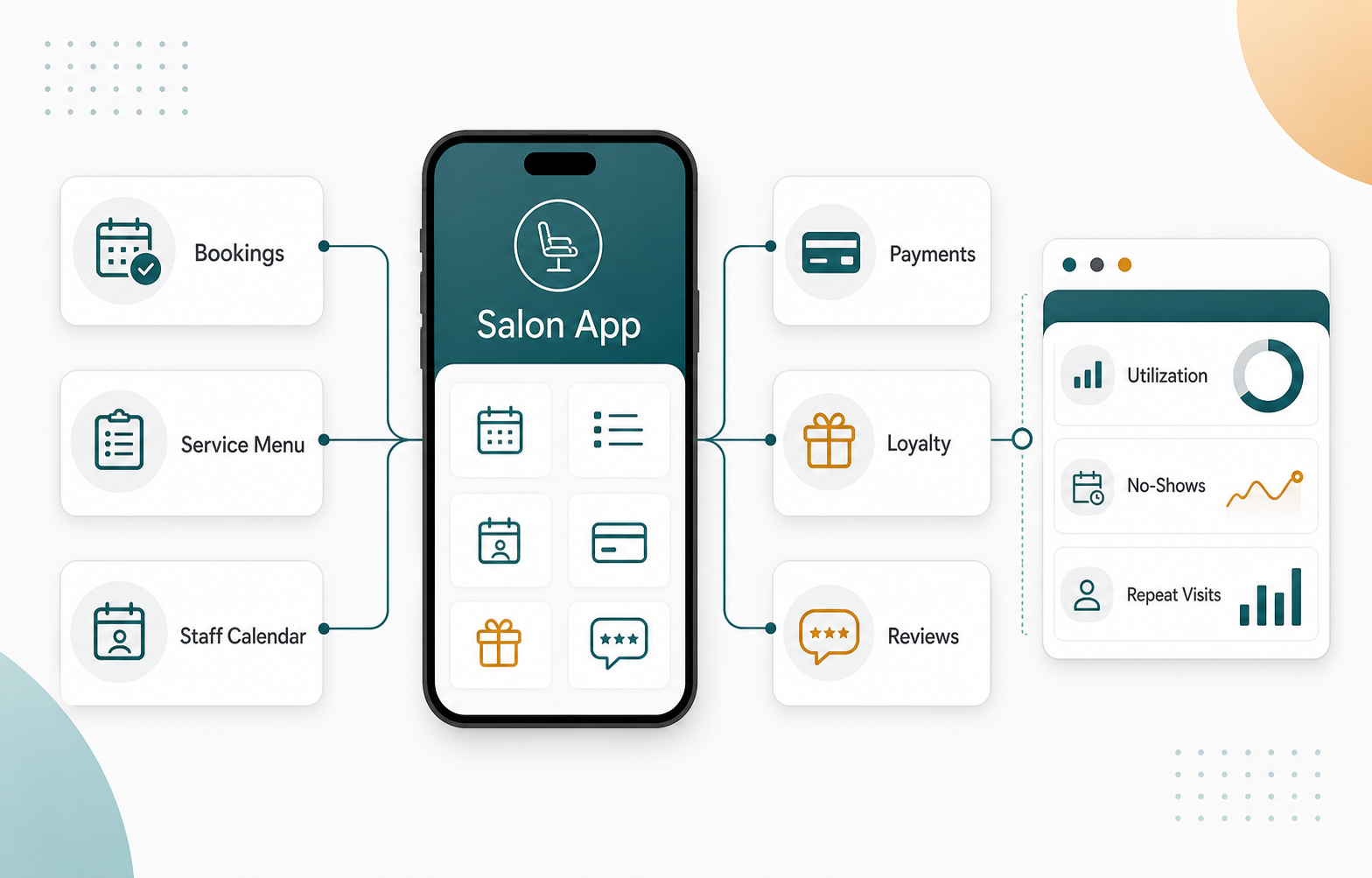
A useful salon app should help clients book faster, help staff manage daily service flow, and help the salon understand what drives repeat visits. The core feature set should include appointment booking, a service catalog, stylist profiles, calendar availability, deposits or online payments, reminders, loyalty rewards, reviews, customer support, and admin reporting.
For most salons, the first release should focus on reliable booking and operations before adding advanced personalization. A strong product roadmap separates client-facing convenience from staff-side control, then connects both sides to clear metrics such as no-show rate, stylist utilization, rebooking rate, average ticket size, and customer retention.
Why Salon App Features Need An Operating Model
Many salon apps start as a booking screen and then become hard to operate. The salon still needs to manage service duration, stylist skill sets, room or chair availability, deposits, cancellations, product add-ons, memberships, reviews, walk-ins, and follow-up campaigns. If these workflows are treated as afterthoughts, the app can create more admin work instead of streamlining service delivery.
This is why salon app planning should happen during mobile app development, not after the interface is designed. The product model should define who uses the app, what each role needs to do, and which operational decisions must be controlled from an admin dashboard.
Salon App Feature Stack
| Feature Area | What It Should Include | Launch Priority |
|---|---|---|
| Client booking | Service search, stylist selection, time slots, deposits, cancellation rules, reminders, and rescheduling. | Must have |
| Service catalog | Service categories, duration, pricing, add-ons, packages, preparation notes, and photos when useful. | Must have |
| Staff calendar | Availability, working hours, leave, skill matching, chair or room allocation, and appointment handoff notes. | Must have |
| Payments and offers | Deposits, full payment, refunds, coupons, membership pricing, wallet support, and invoice records. | Must have |
| Loyalty and retention | Points, tiers, memberships, rebooking prompts, referrals, birthday offers, and winback campaigns. | Growth stage |
| Analytics and feedback | No-shows, utilization, revenue by service, stylist ratings, repeat visits, campaign results, and reviews. | Growth stage |
Booking Flow From Search To Checkout
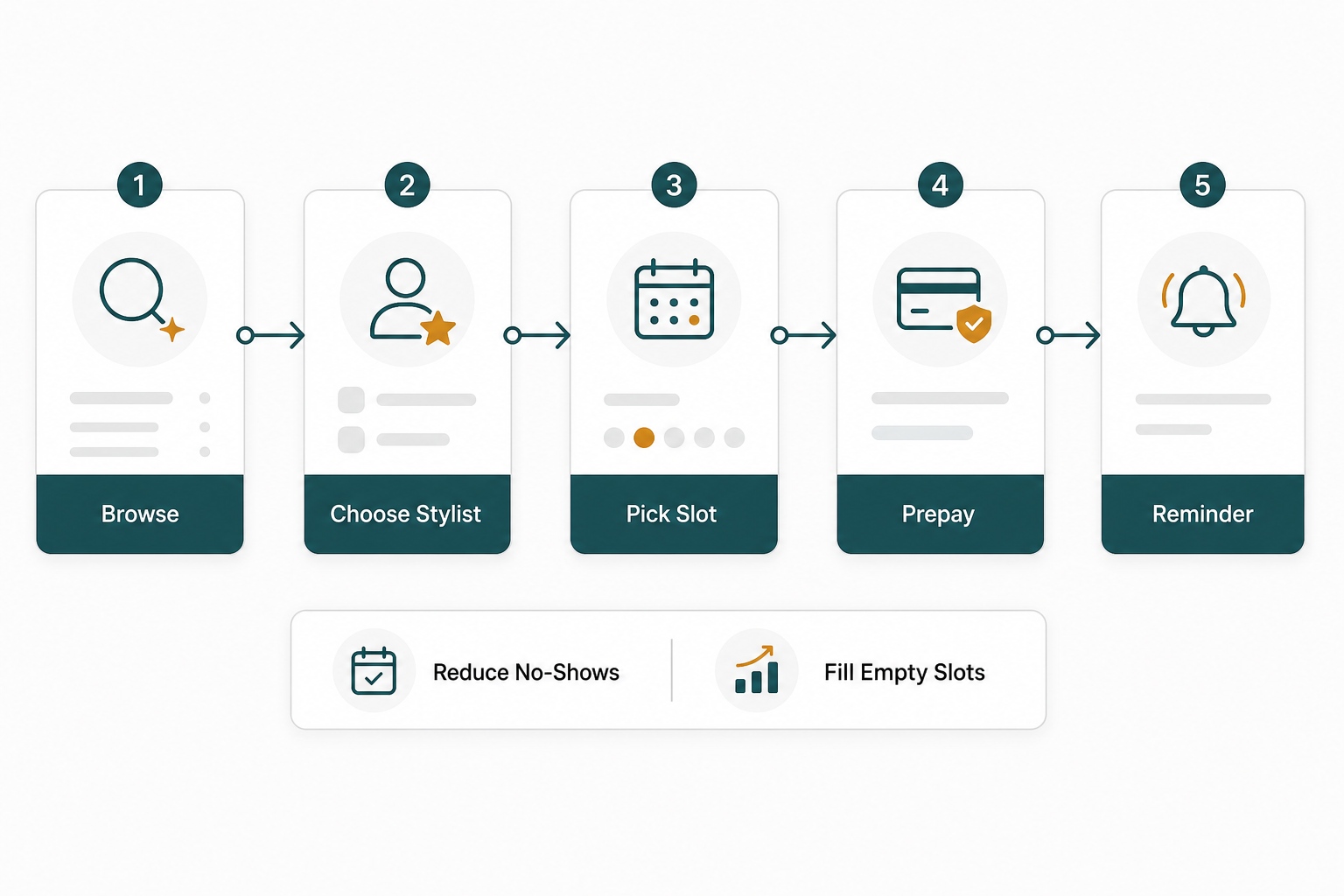
The booking journey should let clients browse services, compare duration and price, choose a stylist when relevant, pick an available slot, pay a deposit or full amount, and receive a clear confirmation. The app should also support rescheduling rules, cancellation windows, waitlists, and reminders because these details directly affect daily salon capacity.
Appointment flows in healthcare, wellness, and beauty products share similar scheduling risks. For a deeper comparison, review NextPage's guide to scheduling and reminders in appointment booking apps, then adapt the same principles to stylist availability, preparation time, and no-show prevention.
Client-Facing Features That Improve Convenience
The client app should make service discovery and rebooking feel effortless. Useful features include profile setup, favorite services, saved stylists, saved payment methods, service history, product preferences, allergy notes, digital consultation forms, before-and-after references, review prompts, and simple support access.
Design matters because beauty services are personal and visual. The interface should feel clear, fast, and trustworthy without hiding price, duration, cancellation rules, or stylist availability. Pair this feature roadmap with salon app design tips when planning the client experience and service detail pages.
Staff, Admin, And Business Control Features
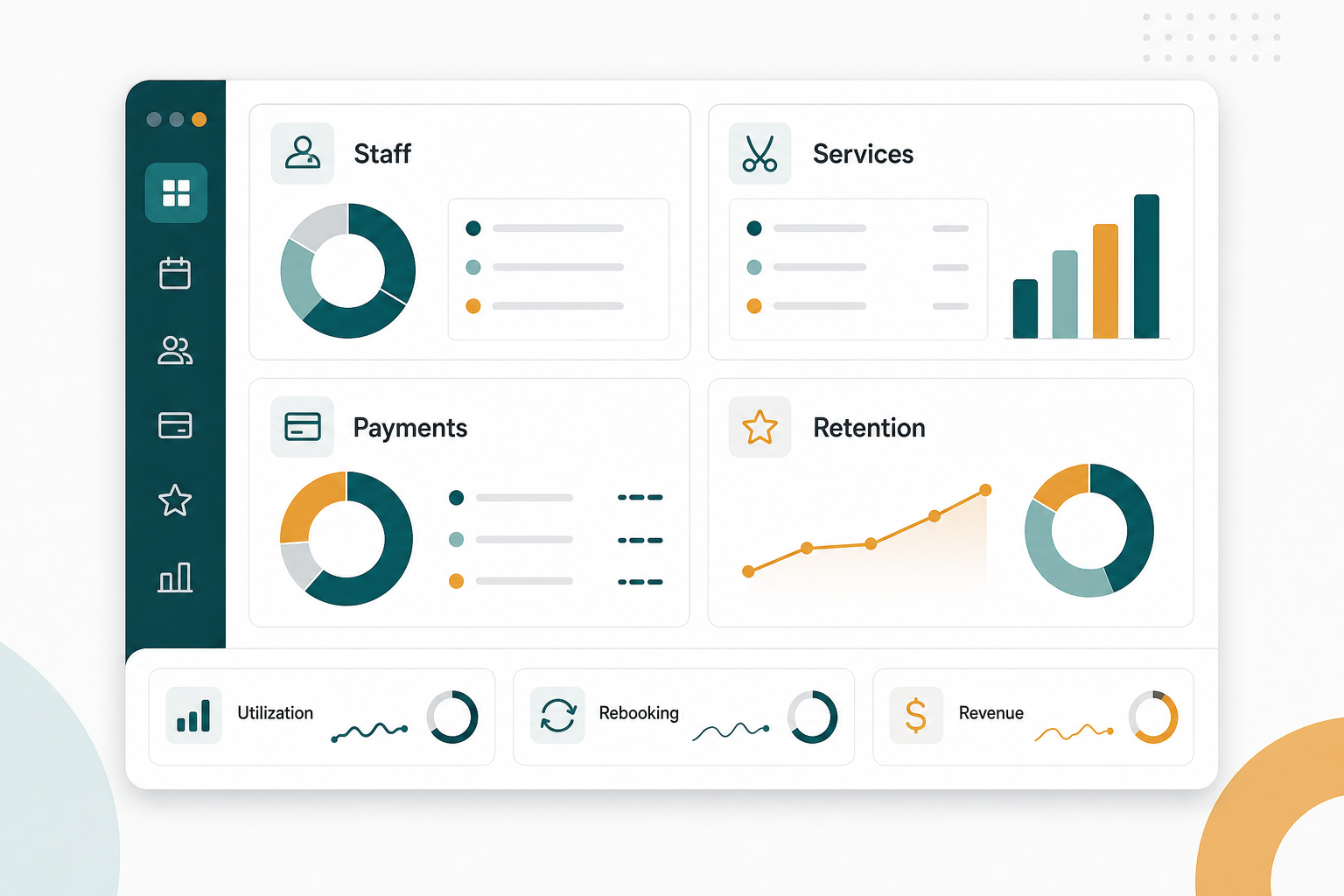
Salon teams need more than a client booking screen. Admin features should include staff roles, permission levels, service setup, duration buffers, location rules, offer management, refund handling, customer notes, review moderation, campaign controls, and reporting. Multi-location salons also need branch-specific calendars, staff transfers, local pricing, and approval workflows.
When the workflow is specific to your operating model, custom software development can be a better fit than forcing a generic booking tool to match complex staff, service, package, and membership rules.
Payments, Loyalty, And Retention
Payments should be designed around trust and operational protection. Salons may need deposits for long services, partial payments for packages, membership billing, gift cards, refunds, tips, and coupon rules. The app should explain the total clearly before confirmation and keep payment records easy for the business to reconcile.
Loyalty should be simple enough for clients to understand and flexible enough for the salon to tune. Points, visit milestones, tier benefits, birthday offers, rebooking discounts, referral rewards, and service bundles can all encourage repeat visits. For a dedicated retention angle, use salon app loyalty program ideas alongside this feature plan.
Personalization And AI Features
Personalization becomes useful once the app has reliable service history, stylist preference, product preference, visit frequency, and campaign response data. Practical personalization can include rebooking reminders, service recommendations, preferred stylist shortcuts, product suggestions, personalized offers, and client segmentation for campaigns.
Advanced AI should be introduced only after the core data is clean. If the roadmap includes automated recommendations, campaign targeting, or preference-based experiences, review AI and machine learning personalization for salon apps before adding complexity to the first release.
MVP Roadmap For A Salon App
- Launch the reliable booking path: service catalog, stylist selection, calendar availability, booking confirmation, deposits or payment, reminders, and basic admin controls.
- Add operational depth: staff permissions, buffers, room or chair management, service packages, cancellation rules, refunds, customer notes, and reporting.
- Build the retention layer: loyalty, memberships, referrals, rebooking prompts, segmented campaigns, and review workflows.
- Scale intelligence: personalization, demand forecasting, campaign attribution, staff utilization analytics, and multi-location optimization.
If the first-release scope is unclear, the MVP Scope Builder can help separate launch-critical functionality from later phases. The Build vs Buy Decision Tool is also useful when comparing booking SaaS, marketplace plugins, and custom salon software.
Metrics To Track After Launch
The most useful salon app metrics connect client behavior with business operations. Track booking conversion, no-show rate, cancellation rate, rebooking rate, stylist utilization, service revenue, add-on uptake, loyalty enrollment, offer redemption, review volume, average rating, support response time, and repeat visit frequency.
Cost and complexity depend on integrations, user roles, payment rules, location count, analytics needs, and how much admin control the salon requires. The Custom Software Cost Estimator can help frame likely budget and timeline assumptions before implementation starts.
Final Recommendation
Build the salon app around the full service lifecycle: discover the right service, choose a trusted stylist, book an available time, pay clearly, arrive prepared, review the experience, and rebook easily. Start with dependable booking and staff operations, then add loyalty, personalization, and analytics once the salon can trust the core workflow.