
A salon app loyalty program works when it gives clients a clear reason to book again, refer a friend, try a higher-value service, and stay connected between appointments. The strongest programs are not just points ledgers. They combine rewards, personalization, booking convenience, referrals, reminders, analytics, and staff workflows inside one salon app experience.
For salon owners and product teams, the goal is simple: increase repeat visits without training clients to wait for discounts. A well-designed loyalty system should protect margins, make rewards easy to understand, and help the business learn which clients are at risk, which offers work, and which services create the most valuable long-term relationships.
Quick Answer: What Should A Salon App Loyalty Program Include?
A salon app loyalty program should include simple earning rules, reward tiers or points, referral incentives, birthday and milestone offers, personalized service recommendations, in-app reward redemption, automated reminders, staff visibility, and analytics for retention, redemptions, average order value, and repeat booking rate. If the program is part of a new product build, NextPage's mobile app development team can help plan the customer app, salon admin, backend, analytics, and launch roadmap together.
Why Loyalty Programs Matter In Salon Apps
Salon revenue depends heavily on repeat behavior. Haircuts, color maintenance, facials, waxing, nail care, massage, and grooming services all have natural return cycles. A loyalty program gives the salon a structured way to encourage the next booking before the client drifts to another provider.
The app becomes more valuable when loyalty is connected to real service moments. Instead of sending generic coupons, the salon can remind a color client when their next appointment is due, offer a treatment bundle after a high-value visit, reward referrals after a positive review, or trigger a win-back offer when a regular has not booked in several weeks.
Define The Business Objective Before Choosing Rewards
Start with the business outcome. A loyalty program built only around discounts can hurt margins and attract deal-seekers. A better program aligns rewards with the behavior the salon wants to improve.
| Objective | Loyalty Mechanic | Metric To Watch |
|---|---|---|
| Increase repeat bookings | Points for completed appointments and pre-booking bonuses | Repeat booking rate and days between visits |
| Improve client lifetime value | Tier benefits for higher annual spend or bundled services | Average revenue per client and service mix |
| Grow through word of mouth | Two-sided referral credits after the referred client completes a visit | Referral conversion rate and cost per acquired client |
| Fill slower slots | Limited rewards for off-peak bookings | Utilization by day, time, stylist, and room |
| Promote premium services | Bonus points or member-only packages for targeted services | Attach rate, package uptake, and margin impact |
Choose Points, Tiers, Or A Hybrid Model
Points are easy to understand: clients earn points for eligible spend or visits and redeem them later. Tiers create status: clients unlock better benefits when they reach a spend, visit, or engagement threshold. A hybrid model often works best for salons because points create immediate value while tiers reward long-term loyalty.
For example, a client could earn points on each appointment while moving from Silver to Gold status after a certain number of visits. Gold clients might receive priority booking windows, complimentary add-ons, early access to seasonal packages, or a higher birthday reward. These benefits feel premium without relying only on price cuts.
Design Rewards That Protect Salon Margins
Rewards should be valuable enough to motivate action but controlled enough to protect profit. Discounts are useful, but they should not be the only incentive. Salons can mix financial rewards with experiential perks that cost less and feel more personal.
- Service add-ons: conditioning treatment, quick consultation, polish upgrade, or styling finish.
- Priority access: early booking for peak slots, new stylist availability, or seasonal packages.
- Milestone gifts: birthday credit, anniversary perk, fifth-visit reward, or referral thank-you.
- Bundle incentives: reward clients who book complementary services together.
- Product sampling: small retail samples tied to the services the client already buys.
Make Loyalty Easy Inside The Salon App
Loyalty features should not feel bolted on. Clients should be able to join, view status, understand rewards, redeem offers, and book eligible services without leaving the app. Staff should also see relevant loyalty context during checkout so the client does not need to explain their status.
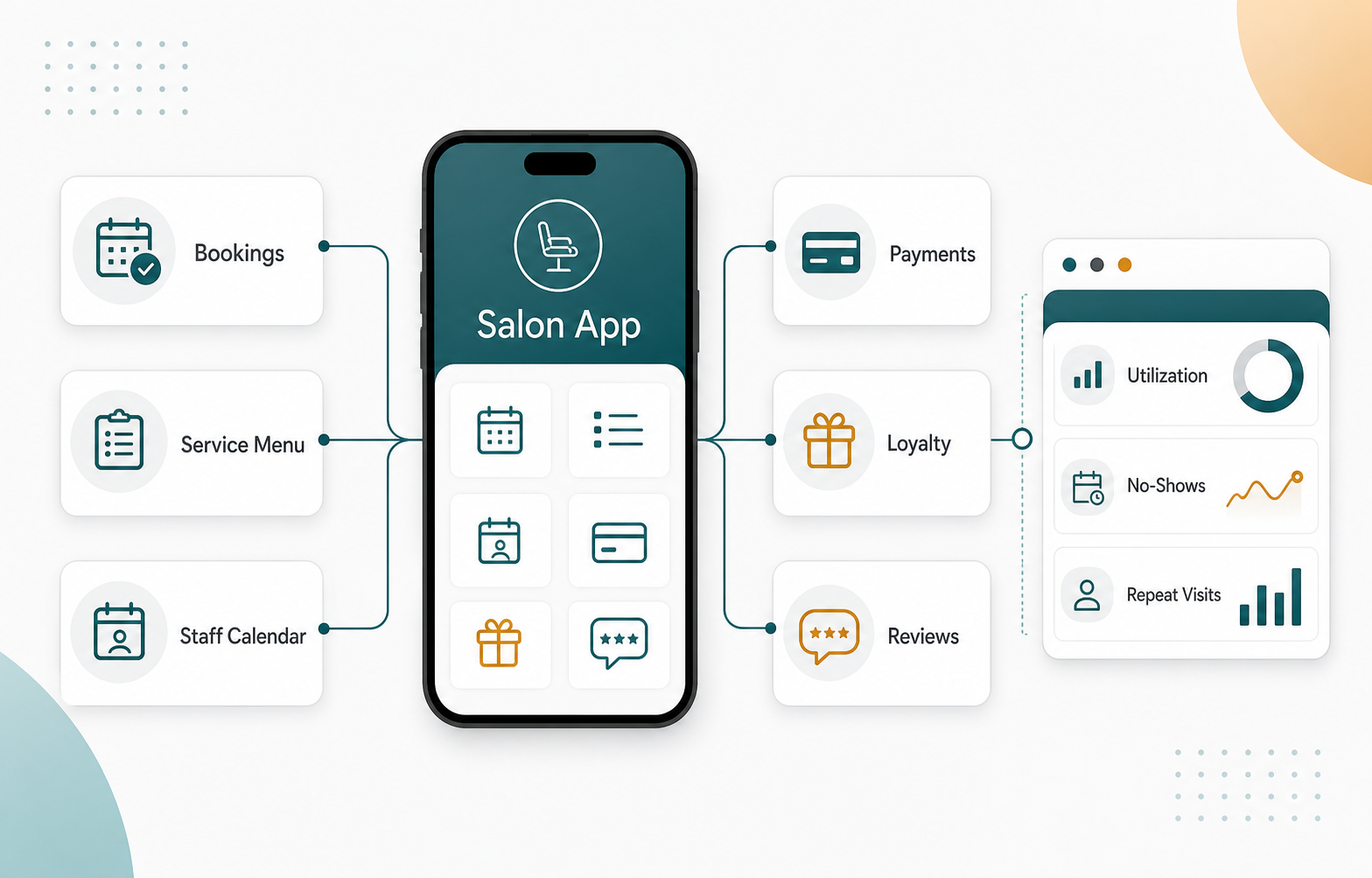
Useful app surfaces include a wallet-style rewards screen, progress bars, available reward cards, referral sharing, birthday offers, upcoming appointment reminders, personalized service suggestions, and clear terms for expiration or exclusions. If the product also needs operational scheduling and service setup, the guide to must-have salon app features is a relevant planning companion.
Use Personalization Without Making The Program Feel Creepy
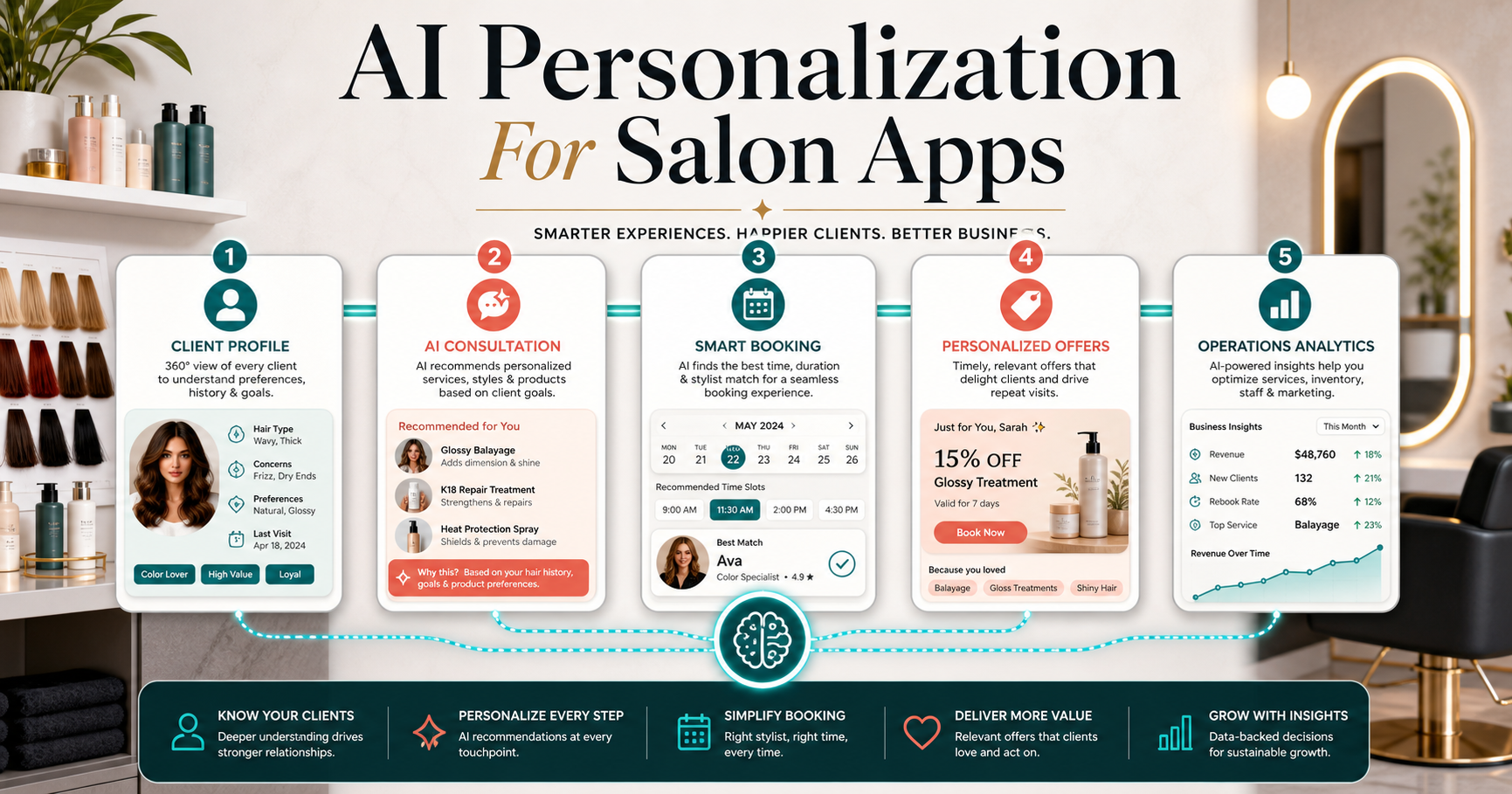
Personalized offers work because salon preferences are specific. Clients care about stylist preference, hair type, skin concerns, appointment timing, budget, allergies, past services, and upcoming occasions. The app can use this context to recommend the right reward instead of blasting the same coupon to every client.
Keep personalization transparent. Give clients control over notifications and preference updates. Explain why an offer appears when useful, and avoid sensitive assumptions. NextPage's article on AI personalization for salon apps goes deeper on data signals, trust, and recommendation design for this type of product.
Add Referral And Community Loops
Referral incentives work well in salons because trust is social. A satisfied client is often willing to recommend a stylist, colorist, barber, or spa service when the app makes sharing easy and the reward is clear.
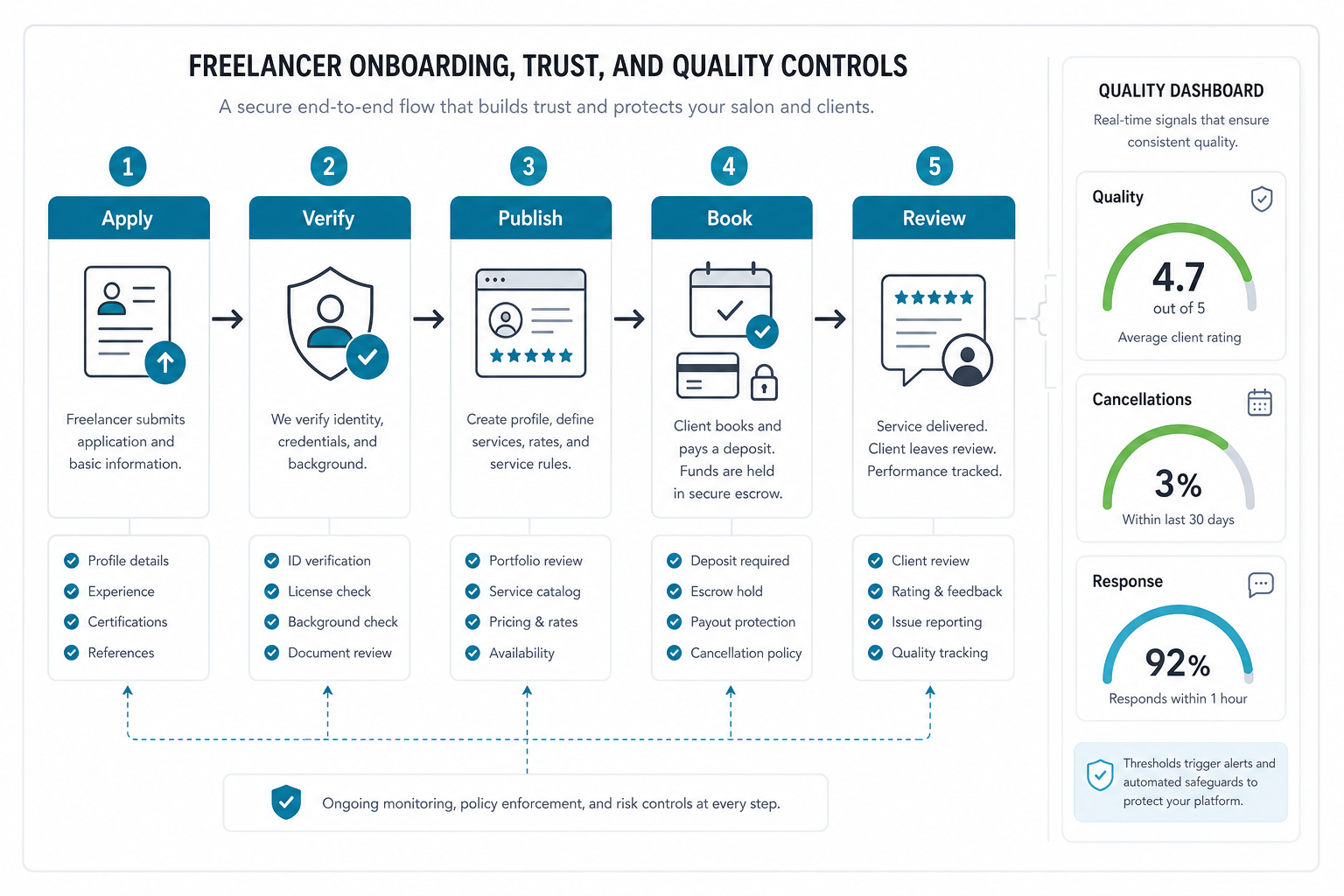
A practical referral flow gives the existing client a shareable code or link, tracks the referred client's first booking, waits until the service is completed, and then credits both people. If the salon works with independent stylists, booth renters, or freelance professionals, the article on building a freelance platform inside a salon app adds useful context for trust, availability, and marketplace-style growth loops.
Track Loyalty Metrics That Actually Improve Decisions
Analytics should show whether the program is making the salon healthier, not just whether clients are collecting points. A dashboard should separate vanity activity from retention and margin impact.
- Enrollment rate: how many app users join the loyalty program.
- Activation: how many members earn or redeem within the first 30 days.
- Repeat booking rate: whether members return faster than non-members.
- Redemption rate: whether rewards are attractive and easy to use.
- Breakage: unused rewards that may signal poor clarity or low value.
- Margin impact: whether offers create profitable behavior or discount visits that would have happened anyway.
- Referral quality: referred bookings, completed visits, and repeat behavior after the first appointment.
Salon App Loyalty Program Implementation Roadmap
Build the program in phases so the salon can learn before adding complexity. A first version can be simple if it captures the right events and keeps the reward rules clear.
- Audit client journeys: map booking, service completion, checkout, reviews, referrals, and rebooking reminders.
- Define reward economics: set earning rules, redemption limits, exclusions, expiration, and approval workflows.
- Design app surfaces: loyalty wallet, progress states, reward cards, referral sharing, and staff checkout visibility.
- Connect backend events: appointments, payments, cancellations, no-shows, reviews, referrals, and notifications.
- Launch a controlled pilot: start with a few rewards and measure repeat bookings, redemptions, and support questions.
- Optimize campaigns: refine offers by segment, service, stylist, season, and appointment cadence.
Before committing to a large release, use the MVP scope builder to separate loyalty essentials from later-phase features. For budget planning across app, backend, admin, and analytics scope, the custom software cost estimator can help frame the work.
Common Mistakes To Avoid
The most common mistake is making the program too complicated. If clients need to read fine print to understand value, they will ignore it. Another mistake is giving discounts without tying them to profitable behavior. The program should encourage repeat booking, referrals, bundles, premium services, and better appointment utilization.
Avoid hidden expiration rules, hard-to-redeem rewards, staff confusion at checkout, excessive push notifications, and one-size-fits-all offers. Also avoid launching without analytics. Without measurement, the salon cannot know whether the loyalty program is building retention or just reducing revenue.
What Product Teams Can Learn From Similar Mobile App Builds
Salon loyalty programs are service-business workflows: the customer app, staff tools, admin controls, payments, reminders, and analytics must stay connected. NextPage's PulseVenue portfolio case study is relevant because it shows a mobile product with discovery, community activity, administration, and moderation workflows that had to stay usable across consumer and operator surfaces.
Final Takeaway
A salon app loyalty program should make clients feel recognized while giving the business better retention data. Start with clear objectives, choose rewards that protect margins, integrate loyalty directly into booking and checkout, personalize offers responsibly, and measure the program against repeat bookings, referrals, lifetime value, and client satisfaction.
When loyalty, booking, reminders, referrals, and analytics work together, the salon app becomes more than a scheduling tool. It becomes the operating layer for stronger client relationships.