
Quick Answer: How To Choose A Custom Software Development Company
A strong custom software development company should prove how it will understand your workflow, control scope, estimate cost, design secure architecture, ship in visible increments, and support the product after launch. Do not shortlist only by hourly rate, portfolio screenshots, or a generic promise to build anything.
Use this checklist to compare vendors across seven areas: discovery quality, cost transparency, security and architecture, delivery process, team model, integration readiness, and post-launch ownership. If a company cannot show how it turns business risk into engineering decisions, the proposal is not ready for approval.
For a build partner that can help convert the evaluation into a phased roadmap, review NextPage's custom software development service. If you need a first-pass budget before vendor calls, start with the custom software cost estimator.
Why A Checklist Beats A Company List
Company lists are useful for market discovery, but they rarely answer the questions that decide whether a software partner can deliver your system. A list can show rankings, locations, services, and broad experience. It usually cannot show whether the vendor understands your operating model, hidden workflow rules, data risks, integration dependencies, or launch support needs.
The SparxIT reference page frames the topic as a 2026 list of custom software development companies and highlights evaluation factors such as expertise, portfolio, technology stack, client reviews, pricing, and support. Those are reasonable starting filters. A buyer still needs a deeper checklist that exposes how each vendor will make decisions once the project becomes real.
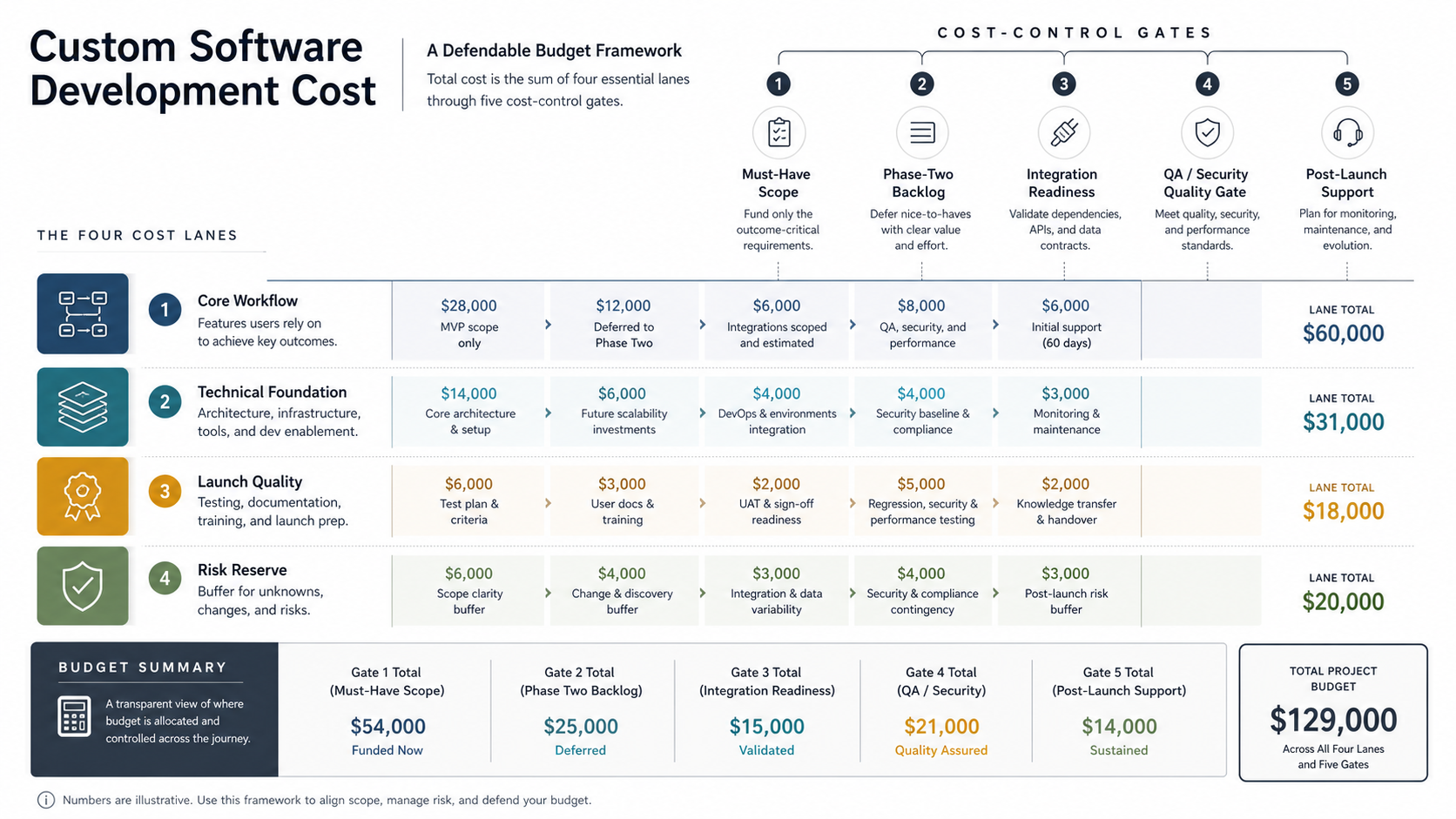
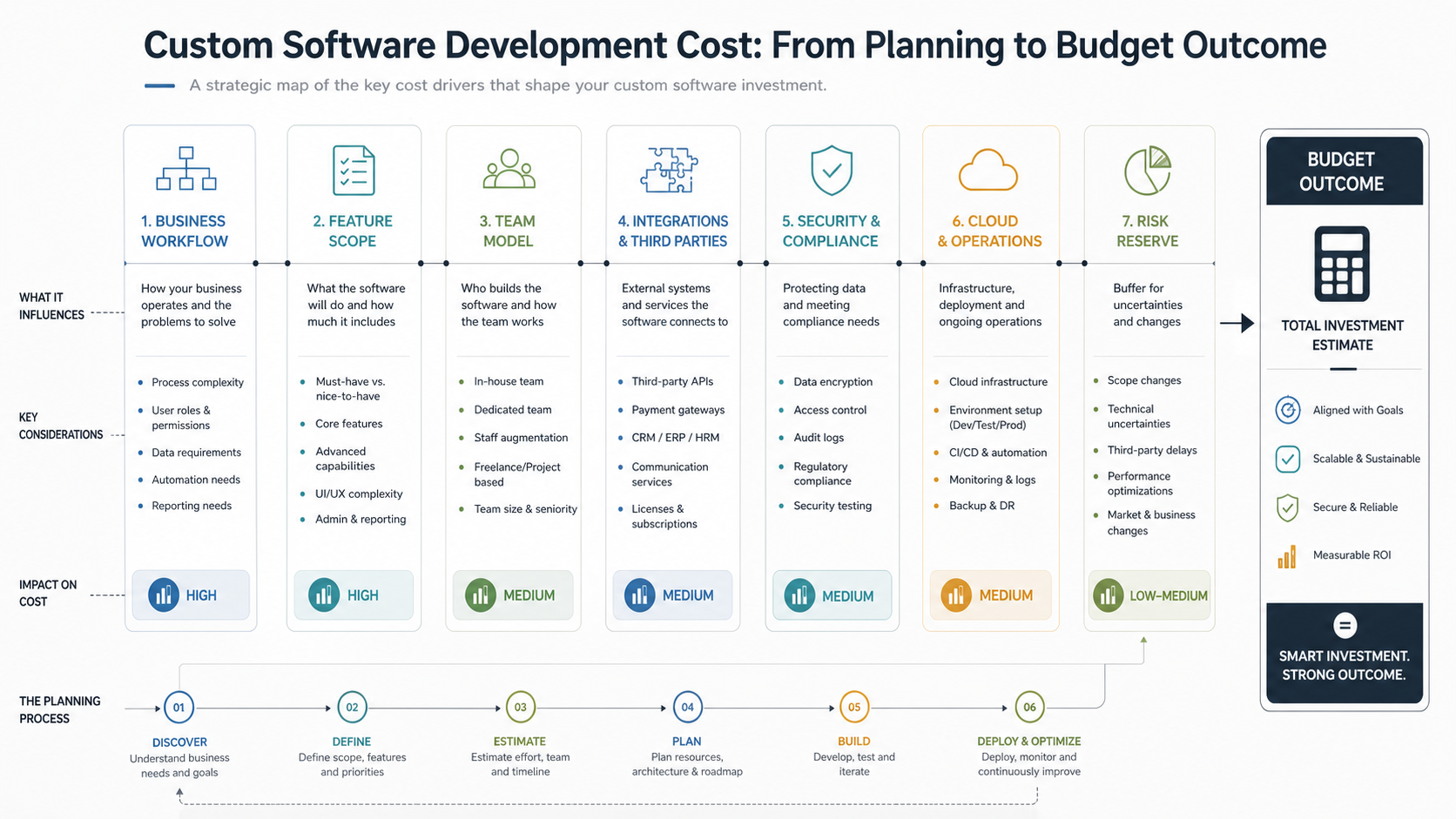
That matters because custom software succeeds or fails in the details: permissions, data states, exception paths, admin tools, migration, integrations, QA coverage, release management, and ownership after launch. The same cost logic appears in NextPage's custom software development cost guide, where workflow complexity and risk matter more than screen count.
Custom Software Company Evaluation Checklist
Use this checklist during shortlisting, discovery calls, proposal review, and final selection. For AI-heavy builds, compare the broader vendor criteria with NextPage's AI development company evaluation checklist so model risk, data quality, and evaluation workflows are not missed. Ask every vendor the same questions so the comparison stays objective.
| Evaluation area | Ask the company | Strong evidence looks like | Risk if skipped |
|---|---|---|---|
| Discovery quality | How will you map workflows, users, decisions, edge cases, and first-release priorities? | Workshop plan, role map, workflow diagram, assumptions log, and acceptance criteria | The build starts from features instead of the business process |
| Cost transparency | Which assumptions drive the estimate, and what would increase or reduce the budget? | Scope bands, team model, risk reserve, phase-two list, and change-control process | A low quote becomes rework, change orders, or unfinished scope |
| Architecture and security | How will you design permissions, data model, integrations, auditability, backups, and environments? | Architecture notes, threat/risk checklist, integration assumptions, and deployment plan | Security and reliability become late-stage fixes |
| Delivery process | How often will we see working software, review progress, test releases, and make tradeoffs? | Sprint cadence, demo rhythm, QA plan, release checklist, and decision log | The project goes quiet until budget or timeline risk is already high |
| Team model | Who is assigned, what seniority do they bring, and who owns product, UX, QA, and DevOps decisions? | Named roles, communication model, escalation path, and continuity plan | You buy hours without the decision-making capacity the project needs |
| Post-launch support | Who owns monitoring, fixes, security updates, cloud costs, documentation, and improvements after launch? | Runbook, SLA assumptions, maintenance scope, analytics review, and roadmap process | The software launches without an operating model |
For vendor evaluations in regulated or industry-specific environments, compare this general checklist with NextPage's healthcare software development company checklist. The core method is similar, but compliance and integration evidence become even more important.
Scope And Discovery Questions
Discovery is where a custom software company proves whether it can think beyond a feature list. The vendor should be able to identify the business workflow, the users involved, the data that moves through the system, the decisions the software must support, and the first release that creates value without overbuilding.
Ask these questions before accepting an estimate:
- Which business workflow are we improving, replacing, or automating?
- Who are the primary, secondary, admin, and support users?
- What are the must-have decisions, statuses, notifications, reports, and exception paths?
- Which parts of the first release are assumptions that need validation?
- What belongs in version one, and what should be deferred until real usage data exists?
- How will acceptance criteria be written so both sides know when work is complete?
A mature vendor should make scope smaller and sharper before making it larger. If the first proposal includes every idea from the kickoff call, use the MVP Scope Builder to separate launch-critical workflow from later-phase ideas.
Cost And Commercial Questions
Cost transparency is not the same as a cheap quote. A useful estimate explains what the team assumed, what is included, what is excluded, where risk reserve sits, and how tradeoffs will be made when new information appears.
Ask vendors to explain:
- Which roles are included in the estimate, and for how long?
- Which features, integrations, reports, admin tools, and support workflows are explicitly included?
- Which assumptions could change the price or timeline?
- How are change requests handled if discovery reveals new complexity?
- How much budget is reserved for QA, launch hardening, documentation, and post-launch fixes?
- What would you remove first if we needed to reduce scope by 20 percent?
The strongest vendors will help you understand cost drivers instead of hiding them. Use NextPage's custom software development cost guide to pressure-test the estimate against workflow complexity, user roles, integrations, security, QA, cloud, and support.
Proposal Review Questions Before You Sign
Once a vendor sends a proposal, review it as a risk document, not only a price document. A signable proposal should show what the company understood, what it assumed, what it will prove early, and what both sides will own after launch.
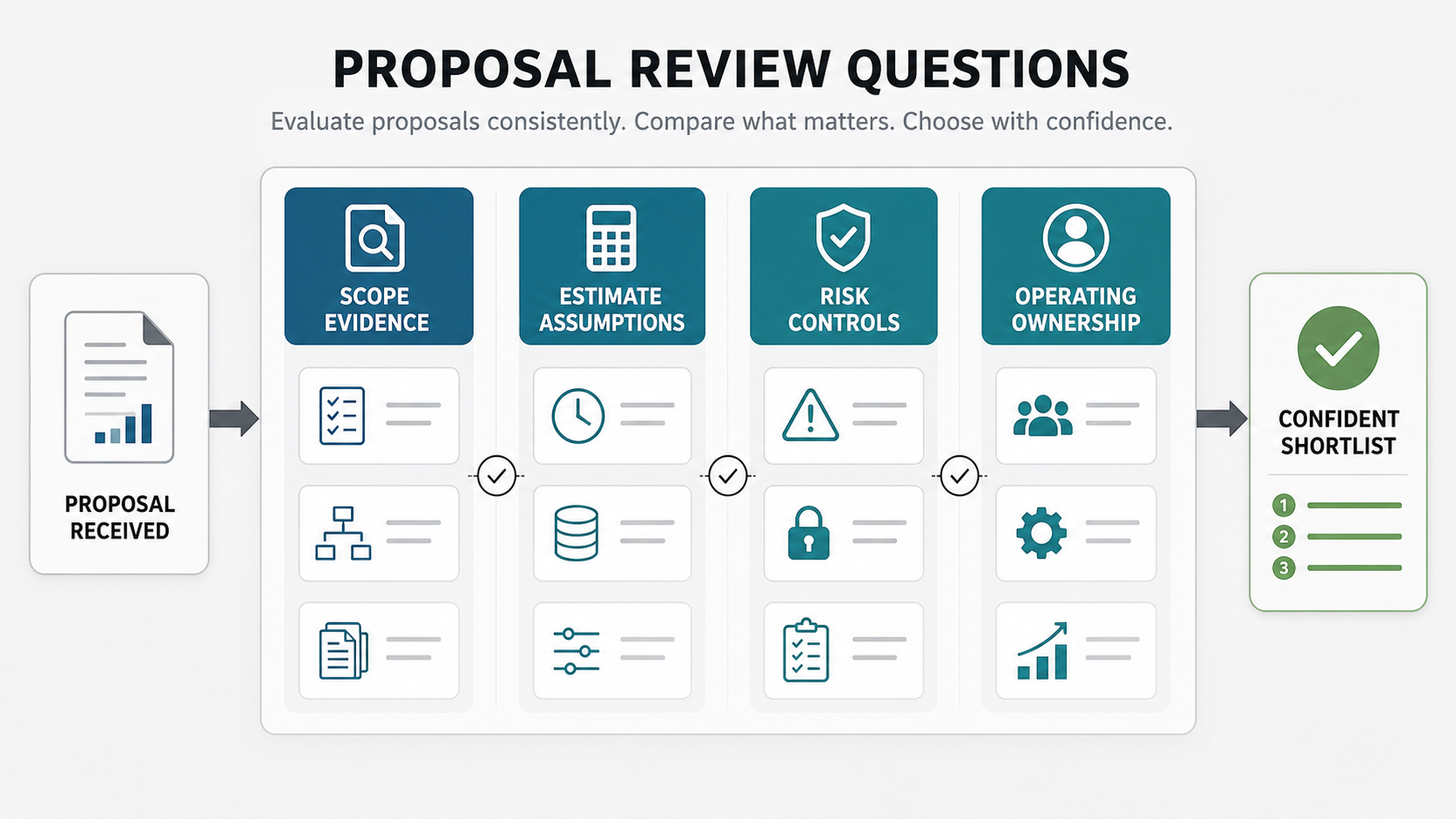
Use these checks before moving a vendor from shortlist to contract:
- Scope evidence: Does the proposal name workflows, user roles, acceptance criteria, edge cases, and out-of-scope items?
- Estimate assumptions: Does it explain what could change cost, timeline, integrations, data migration, QA effort, or cloud spend?
- Risk controls: Does it include early architecture decisions, security expectations, staging environments, release checks, and rollback planning?
- Operating ownership: Does it define who owns source code, credentials, documentation, monitoring, analytics, support, and roadmap decisions?
If you are comparing offshore, retained, or hybrid teams, pressure-test the commercial model with NextPage's guide to software development outsourcing to India and the software outsourcing in India service page. The right partner should make ownership and delivery visibility clearer before you sign, not after the first sprint starts.
Security, Architecture, And Data Questions
Custom software often becomes a core business system. That means vendor evaluation should include architecture and security before development starts, not after the UI is approved.
Ask each company how it will handle:
- Authentication, authorization, role-based access, and admin permissions.
- Data model design, data ownership, retention, backups, exports, and deletion.
- Integration failure states, retries, logs, reconciliation, and support diagnostics.
- Separate development, staging, and production environments.
- Audit trails for important business actions.
- Dependency updates, secrets management, cloud configuration, and incident response.
If the project replaces old software or fragile internal systems, run a modernization review first. The legacy software modernization scorecard and legacy application modernization roadmap can help decide whether to stabilize, refactor, rebuild, or replace.
Delivery Process And Quality Questions
Good delivery is visible. You should know what has been decided, what has changed, what is blocked, what is being tested, and what tradeoffs are coming. A vendor that disappears for weeks and returns with a nearly finished build is creating risk, not reducing it.
Ask about the operating rhythm:
- How often will we see working software?
- Who approves UX, technical scope, QA acceptance, and release readiness?
- How are decisions, assumptions, bugs, and change requests tracked?
- What automated and manual testing will be used before each release?
- How will staging, production deployment, rollback, and monitoring work?
- Which metrics will show whether the software is improving the target workflow?
Look for a delivery process that creates evidence every week: demos, test notes, sprint goals, release checklists, and documented decisions. Those artifacts matter when stakeholders ask why the timeline or budget changed.
Team Model And Ownership Questions
The right software company is not always the one with the largest team. It is the one with the right decision-making coverage for your project. A small internal tool may need a lean team. A platform with integrations, analytics, and long-term roadmap pressure may need product, UX, backend, frontend, QA, and DevOps capacity.
Ask these team-model questions:
- Who is the product owner on the vendor side, and who is responsible on our side?
- Which engineers will work on architecture, integrations, frontend, backend, QA, and cloud?
- How much senior review is included?
- How does the vendor handle holidays, attrition, urgent fixes, and knowledge transfer?
- Will we own source code, documentation, credentials, infrastructure, and deployment access?
- What does the team model look like after launch?
If you are comparing a project quote against a retained or dedicated team, use the Dedicated India Team Cost Calculator and the guide to dedicated development team cost in India. A dedicated model can make sense when custom software becomes a long-term operating capability.
Red Flags When Comparing Software Companies
- Instant fixed price: the vendor gives a confident number before understanding workflows, users, integrations, and data complexity.
- Portfolio without process: the sales call shows attractive screens but no discovery artifacts, QA evidence, release process, or support model.
- Technology-first pitch: the company starts with frameworks and buzzwords instead of business outcomes and operating constraints.
- No architecture discussion: permissions, auditability, environments, backups, and integration failure states are treated as implementation details for later.
- Weak commercial boundaries: exclusions, change-control rules, post-launch fixes, and ownership terms are vague.
- No product tradeoff muscle: every requested feature is accepted instead of challenged, sequenced, or moved to a later phase.
- Support as an afterthought: monitoring, security updates, dependency management, cloud costs, documentation, and user feedback are not part of the plan.
Vendor Scorecard For Final Selection
After the first discovery round, score every vendor against the same categories. The point is not to turn judgment into a spreadsheet. The point is to force evidence into the comparison.
| Category | Suggested weight | Pass condition |
|---|---|---|
| Discovery and scope clarity | 20% | Workflow, roles, assumptions, acceptance criteria, and phase-one boundaries are clear |
| Architecture and security evidence | 20% | Data model, permissions, integrations, environments, backups, and risk controls are discussed early |
| Cost transparency | 15% | Estimate explains assumptions, exclusions, change-control, reserve, and tradeoff options |
| Delivery process and QA | 15% | Demo cadence, testing, release checklist, decision log, and blocker handling are defined |
| Team fit and continuity | 15% | Roles, seniority, communication, escalation, and knowledge transfer are credible |
| Support ownership | 15% | Monitoring, fixes, updates, documentation, analytics, and roadmap process are included |
Give each vendor a 1 to 5 score for every category and write one evidence note beside the score. If a company cannot provide evidence, reduce the score. If a vendor surfaces uncomfortable risks early and proposes a phased plan, that is usually a positive signal.
How NextPage Helps You Choose And Build
NextPage helps teams turn custom software ideas into buildable plans: workflow definition, first-release scope, architecture, UX, integrations, QA, cloud operations, and post-launch support. We can help you evaluate an existing proposal, compare team models, or create a phased roadmap before committing to development.
If you are choosing a custom software development company, bring your workflow notes, integration list, target users, budget range, and deadline to a focused planning call. We will help identify the risky parts of the build, trim the first release to what proves value, and map the delivery evidence you should expect before signing.