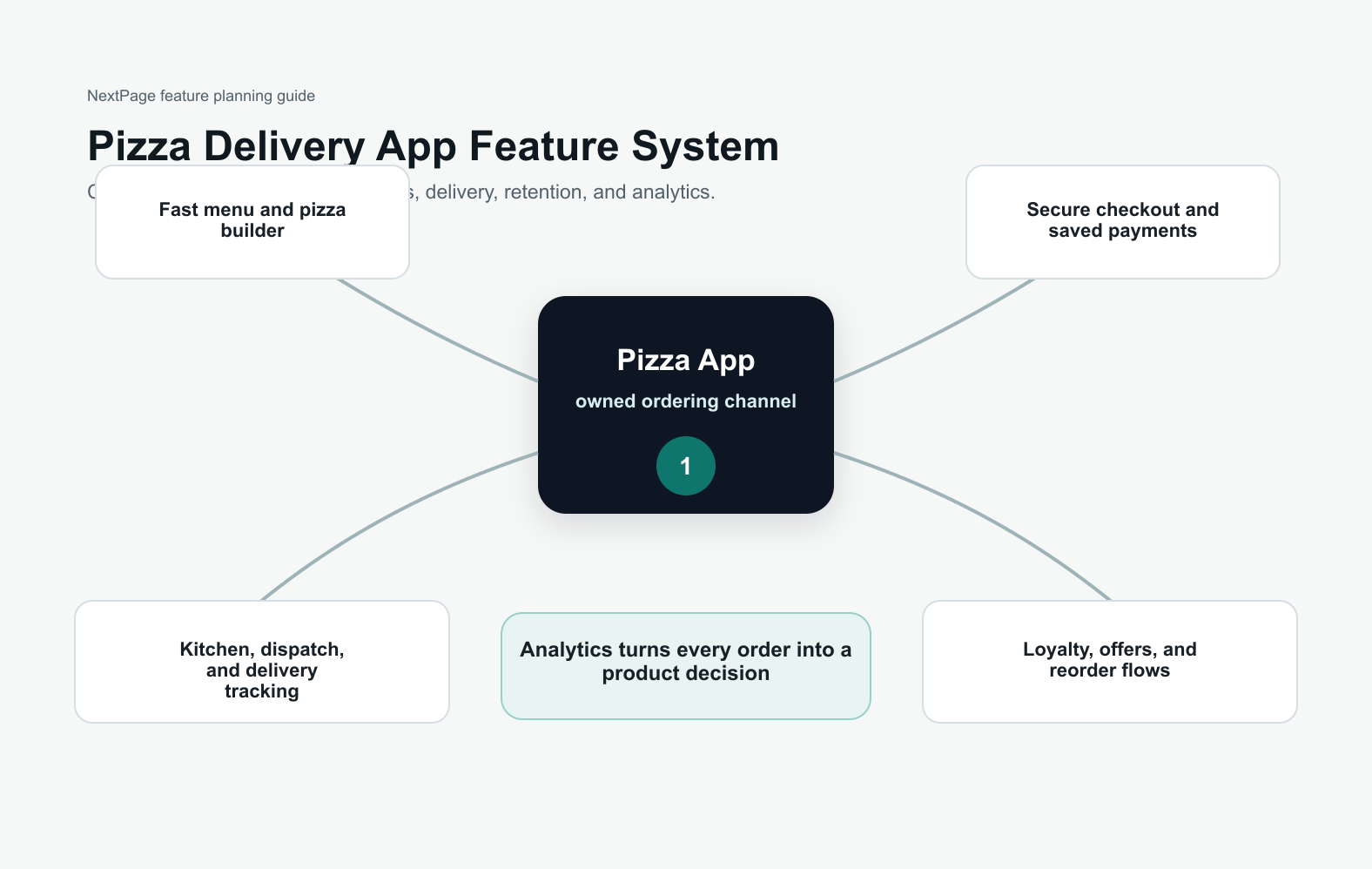

Food delivery app development gives restaurants, cloud kitchens, cafes, and food entrepreneurs a direct digital channel for ordering, customer engagement, operations, and repeat revenue. A strong app does more than list menu items. It connects discovery, ordering, payment, delivery updates, loyalty, feedback, and restaurant-side controls into one reliable customer journey.
For restaurants that still depend only on phone orders, walk-ins, social media messages, or third-party marketplaces, a dedicated food delivery app can reduce friction and create more control over the customer relationship. The biggest benefits come when the app is planned as a business system, not just a mobile menu.
What Is A Food Delivery App?
A food delivery app is a web or mobile platform that lets customers browse a menu, customize items, place orders, pay securely, track delivery status, and communicate with the restaurant or delivery team. For the business, the app usually includes admin tools for menu updates, order management, offers, delivery zones, customer data, and reporting.
Some businesses use marketplace apps for reach. Others build a dedicated app to own their brand, margins, customer data, and loyalty experience. Many restaurants use both: marketplaces for discovery and their own app for repeat customers.
How Food Delivery Apps Work
A typical food delivery app workflow moves through seven connected steps:
- Customer onboarding: users sign up, save delivery addresses, and set payment preferences.
- Menu browsing: customers search categories, view item details, check add-ons, and see dietary or allergen information.
- Cart customization: users choose portions, toppings, spice levels, sides, instructions, and delivery or pickup options.
- Secure checkout: the app confirms taxes, fees, discounts, and payment before sending the order to the restaurant.
- Restaurant acceptance: staff accept, reject, update, or schedule the order from a kitchen dashboard or POS-connected workflow.
- Preparation and dispatch: the system updates order status and sends the right information to delivery staff or third-party logistics.
- Post-order retention: receipts, feedback, loyalty points, offers, and reorder prompts help bring the customer back.
If you are planning this kind of workflow, NextPage's mobile app development team can help decide whether the first release should be native, cross-platform, or mobile-first web.
Benefits Of Food Delivery Apps For Restaurants
For restaurants, the main benefit is control. A dedicated food delivery app gives the business a channel it can improve over time instead of renting the full customer relationship from a marketplace.
| Benefit | How It Helps The Business | App Features That Enable It |
|---|---|---|
| Higher order volume | Customers can order without calling, waiting, or repeating details. | Fast menu browsing, saved addresses, reorder, offers, checkout |
| Better margins | Direct ordering can reduce dependence on high-commission channels. | Branded ordering, delivery zones, coupons, loyalty, payment rules |
| Operational clarity | Kitchen and delivery teams see status, timing, and order details in one place. | Order dashboard, preparation states, dispatch views, notifications |
| Customer data ownership | The restaurant can understand repeat behavior, popular items, and drop-off points. | Customer profiles, analytics, feedback, campaign tracking |
| Brand loyalty | Customers remember the restaurant experience instead of only the marketplace. | Branded UI, rewards, personalized offers, saved favorites |
For a deeper feature checklist, compare this article with essential features for a pizza delivery app and key features for food app development.
Benefits Of Food Delivery Apps For Customers
Customers use food delivery apps because they make ordering predictable. The app removes uncertainty around menu availability, price, payment, preparation time, delivery tracking, and support.
- Convenience: customers can order from home, work, travel locations, or repeat orders from past history.
- Choice: menus, add-ons, cuisine types, dietary filters, combos, and deals are easier to compare.
- Transparency: real-time status updates reduce anxiety about whether the order was accepted or dispatched.
- Personalization: saved favorites, recommendations, and loyalty rewards make repeat ordering faster.
- Safer payments: digital payments, receipts, refunds, and wallet options reduce manual friction.
The customer experience only works when the interface is fast and clear. If your team is comparing native and cross-platform options, read Native Vs Cross Platform Mobile App Development before committing to a stack.
Operational Benefits For Kitchens And Delivery Teams
A food delivery app should reduce operational noise. When orders arrive through phone calls, WhatsApp, Instagram, and marketplace tablets, teams spend more time reconciling details. A custom app can centralize ordering rules and create a cleaner operating rhythm.
- Fewer order errors: structured modifiers, required fields, and clear item notes reduce missed instructions.
- Better kitchen timing: preparation states help staff sequence orders and communicate realistic ETAs.
- Delivery-zone control: businesses can define service radius, minimum order values, delivery fees, and pickup options.
- Inventory-aware menus: unavailable items can be paused quickly so customers do not order out-of-stock dishes.
- Cleaner reporting: managers can track order value, peak hours, repeat purchases, campaign impact, and refunds.
Restaurants planning a Domino's-style ordering journey can also review how to develop a pizza delivery app like Domino's for architecture and launch planning ideas.
Marketing And Retention Benefits
The strongest food delivery apps turn one-time orders into repeat relationships. This is where direct apps can outperform generic ordering channels because the business can create its own retention loops.
- Push notifications: send relevant offers for lunch, dinner, weekends, abandoned carts, or favorite dishes.
- Loyalty programs: reward repeat ordering through points, tiers, wallet credits, or exclusive combos.
- Personalized recommendations: use order history to suggest items that feel helpful instead of random.
- Referral campaigns: let satisfied customers invite friends while tracking reward cost.
- Feedback loops: collect ratings and issue resolution data before dissatisfaction turns into public reviews.
Retention also depends on app-store visibility and messaging. NextPage's guide to App Store Optimization can help once the app is ready for launch.
Dedicated Food Delivery App Vs Marketplace Listing
A marketplace listing is useful for reach, especially when the restaurant is new. A dedicated app is useful for ownership. The right decision depends on margin pressure, repeat order volume, brand strength, delivery operations, and how much customer data the business needs.
| Option | Best For | Trade-Off |
|---|---|---|
| Marketplace app | Discovery, quick demand, new locations, low upfront engineering | Less control over fees, data, loyalty, and brand experience |
| Dedicated app | Repeat customers, direct ordering, branded experience, controlled offers | Requires product planning, launch support, and ongoing improvement |
| Hybrid approach | Restaurants that want marketplace reach and direct retention | Needs clear channel strategy so offers and operations do not conflict |
If you want to estimate the first release, start with the custom software cost estimator or shape the initial scope with the MVP scope builder.
Must-Have Features For A Food Delivery App
The first version should focus on ordering speed, operational reliability, and retention. Avoid overloading the app with features that do not improve the order journey.
- Customer app: account, menu, search, filters, cart, offers, payment, order tracking, ratings, support, and reorder.
- Restaurant dashboard: menu management, order acceptance, preparation status, refunds, availability, delivery zones, and analytics.
- Delivery workflow: assignment, route context, status updates, proof of delivery, and exception handling.
- Marketing tools: coupons, loyalty, push notifications, referrals, abandoned-cart campaigns, and customer segments.
- Admin controls: user roles, tax settings, payment reconciliation, reporting, and fraud checks.
For businesses that want a direct ordering model without marketplace commissions, NextBite is a relevant NextPage product example for social-first food entrepreneurs.
Challenges To Plan For Before Development
Food delivery app development has real operational complexity. The technology can only help if the business model and fulfillment process are clear.
- Delivery reliability: late orders damage trust quickly, so ETAs and dispatch rules need careful design.
- Menu complexity: add-ons, taxes, combos, availability, and modifiers must be easy for staff to maintain.
- Payment and refund edge cases: failed payments, partial refunds, cancellations, and wallet credits need rules.
- Customer acquisition: a dedicated app still needs promotion, ASO, referrals, and offline-to-online conversion.
- Support workflow: restaurants need a plan for complaints, missing items, substitutions, and delivery problems.
If your product needs web dashboards, APIs, and mobile surfaces together, NextPage's web app development team can help plan the admin and operations layer alongside the mobile experience.
How To Start A Food Delivery App Project
Start by defining the business model before designing screens. A practical discovery phase should answer these questions:
- Will the app serve one restaurant, multiple branches, franchises, cloud kitchens, or a marketplace?
- Will delivery be handled by internal staff, third-party logistics, customer pickup, or a hybrid model?
- Which payment methods, refund rules, taxes, and offers must be supported at launch?
- Which customer behaviors matter most: first order, repeat order, higher basket size, loyalty, or referrals?
- Which integrations are required for POS, inventory, CRM, analytics, accounting, or messaging?
NextPage's portfolio includes mobile-first product work such as ChairLink, which shows how a service business can turn booking, customer engagement, and repeat visits into a focused mobile experience.
Final Takeaway
The benefits of food delivery app development are strongest when the app improves both customer convenience and restaurant operations. A good app increases direct orders, reduces manual work, supports loyalty, gives the business better data, and creates a channel that can keep improving after launch.
The best first step is not to copy a marketplace feature list. It is to define the ordering model, choose the smallest reliable launch scope, and connect customer experience with kitchen, delivery, payment, and marketing workflows from the start.