
Social Media Integration In Pizza Delivery Apps: The Practical Growth Layer
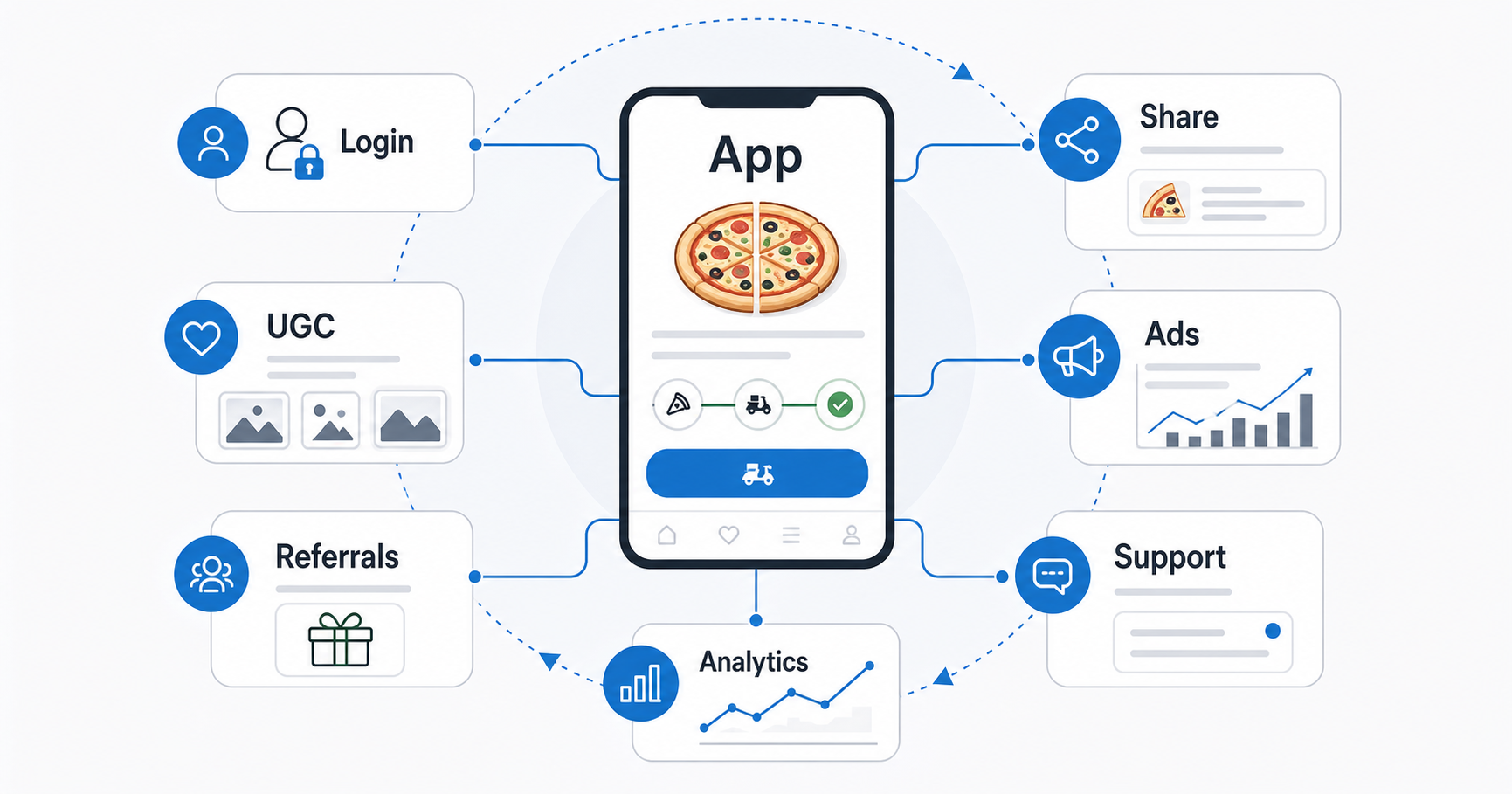
Social media integration in a pizza delivery app should do more than add share buttons. The strongest implementations connect ordering, loyalty, customer support, campaign tracking, and user-generated content into one measurable growth loop. For restaurant operators, that means every share, referral, review, and support conversation can point back to orders instead of living as disconnected marketing activity.
If you are planning a new product with a mobile app development partner, treat social integration as a product feature set, not a last-minute marketing plugin. The right scope depends on your launch goal, audience, existing channels, and how much operational follow-up your team can handle.
Quick Answer: What Should A Pizza App Integrate First?
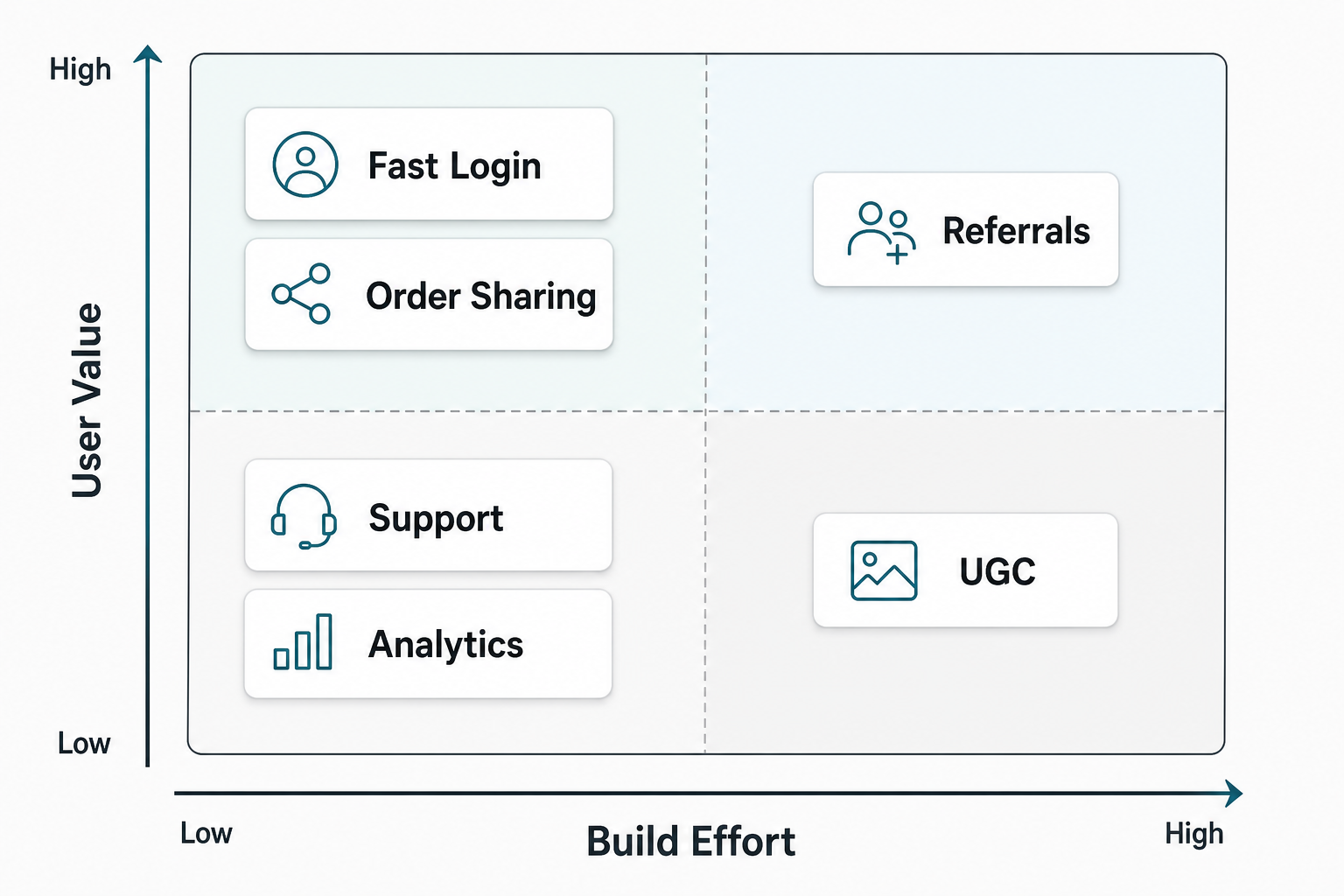
Start with social login, order sharing, referral tracking, review prompts, and campaign attribution. These features are usually more valuable than complex social feeds because they reduce login friction, help customers share high-intent moments, and give the business measurable data. Add influencer workflows, user-generated content galleries, and social listening after the core ordering and retention flows are stable.
| Feature | Best Use | Implementation Note |
|---|---|---|
| Social login | Faster onboarding and fewer abandoned signups | Offer email or phone login as a fallback. |
| Order sharing | Turning a placed order into organic reach | Share the offer or reorder link, not private order details. |
| Referral links | Tracking friend invites and campaign ROI | Use unique codes tied to customer and campaign records. |
| UGC prompts | Collecting customer photos, reviews, and testimonials | Ask for consent before reposting customer content. |
| Support inbox | Responding to public and private customer issues | Connect support status to the customer profile. |
| Analytics | Measuring conversion from social activity | Track source, campaign, coupon, and repeat order behavior. |
Why Social Media Integration Matters For Pizza Delivery Apps
Pizza is naturally shareable: group orders, limited-time offers, event nights, late-night cravings, and visual menu items already fit social behavior. A delivery app can use that behavior to increase reach, but only if the product captures the moment while the customer is engaged. A share prompt after checkout, a referral reward on a reorder screen, or a review request after delivery is more effective than a generic social icon buried in the footer.
The business value is strongest when social features connect to operations. Marketing teams need campaign data, store managers need support visibility, and product teams need to know which actions lead to repeat orders. If your roadmap also includes promotions, coupons, or loyalty, pair this article with pizza delivery app promotions and marketing so the social layer supports the complete revenue journey.
Which Social Features Matter Most?
Social Login And Account Linking
Social login can reduce signup friction, but it should be implemented with clear permissions and fallback options. Customers should understand what data is requested, why it is needed, and how to disconnect an account later. Do not make a social account mandatory if phone-based ordering or email login is common in your market.
Order Sharing, Referral Links, And Group Moments
Order sharing works best when it gives customers something useful to send: a reorder link, a group deal, a limited-time coupon, or a referral reward. Avoid exposing private order details. The app should generate a clean share card, track the campaign source, and connect conversions back to the customer or promotion.
User-Generated Content And Review Prompts
User-generated content can create social proof, but it needs moderation and consent. Prompt customers to share photos, ratings, and short reviews after a successful delivery. If you want to feature customer posts in the app or on owned social channels, make the permission explicit and easy to revoke.
Influencer And Local Partnership Workflows
Influencer campaigns are easier to measure when the app supports partner codes, landing links, coupon rules, and order attribution. Local creators, campus groups, event organizers, and nearby businesses can all drive qualified traffic if every campaign has a clear offer and tracking path.
Social Support And Listening
Customers often complain or ask questions on public channels before they contact support. A mature app setup should connect social support activity with customer profiles, order IDs, refund status, and delivery notes. This is where custom software development can matter, because generic tools rarely match the exact operating workflow of a restaurant brand.
Implementation Checklist For Social Media Integration
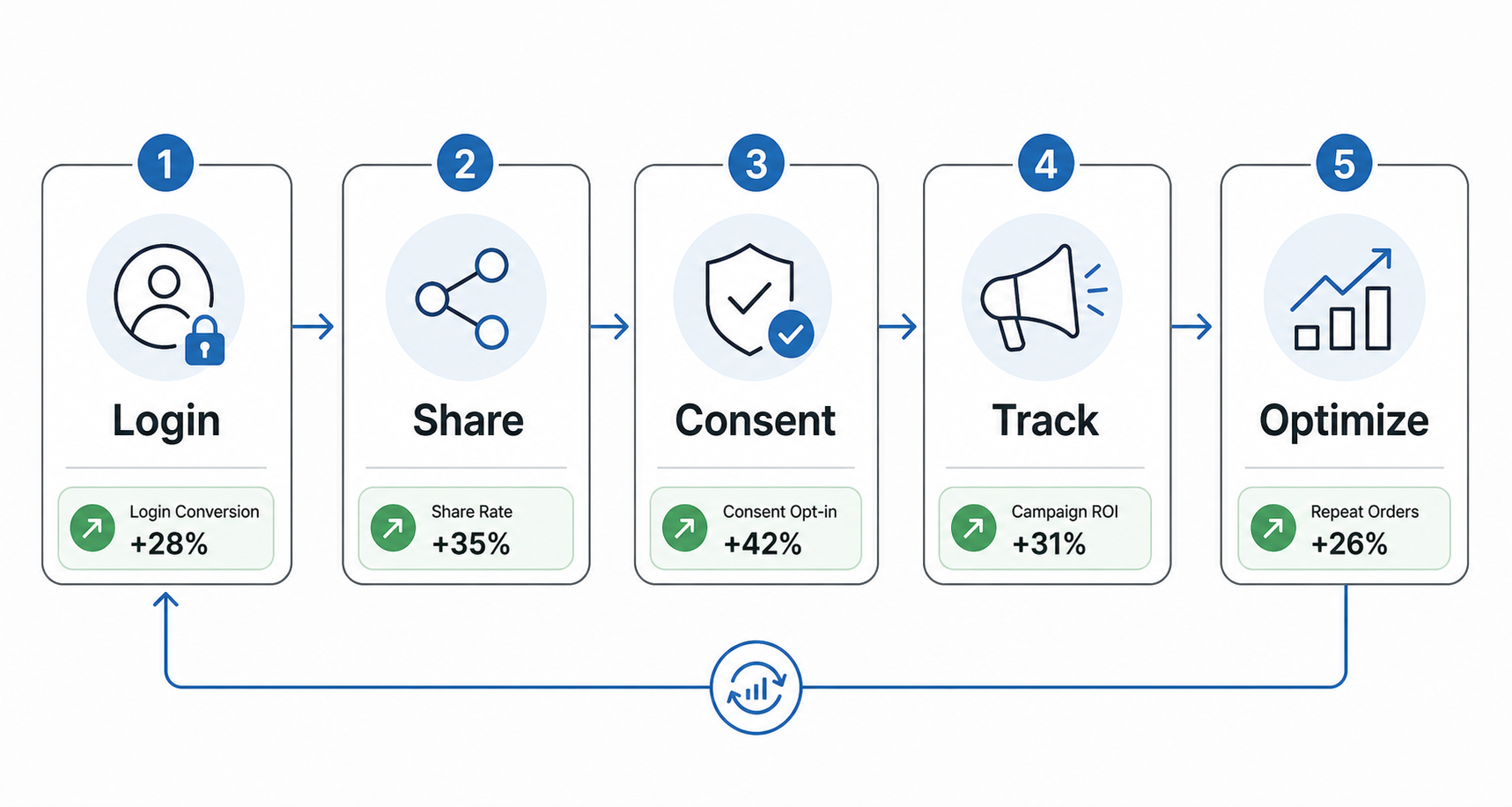
- Define the growth event. Decide whether the feature should increase signups, first orders, repeat orders, reviews, referrals, or support resolution.
- Map the user moment. Place prompts where the customer has intent: after checkout, after delivery, on reorder, inside loyalty rewards, or after a resolved support case.
- Design consent and privacy controls. Explain permissions, avoid unnecessary data collection, and let customers disconnect social accounts.
- Instrument campaign tracking. Capture source, campaign, coupon, referral code, order value, and repeat purchase behavior.
- Review performance monthly. Remove low-performing prompts, improve offer clarity, and shift budget toward social channels that produce profitable orders.
If you are still shaping the release scope, use the MVP Scope Builder to separate must-have launch features from later marketing enhancements. For budget planning, the Custom Software Cost Estimator can help frame the effort around integrations, roles, and complexity.
Common Mistakes To Avoid
- Adding every platform at launch. Start with the channels your customers already use and the integrations your team can maintain.
- Using generic share copy. Shared messages should highlight the offer, menu item, or reorder benefit.
- Ignoring attribution. If social campaigns cannot be tied to orders, the team will not know what to improve.
- Overlooking moderation. UGC and public support need rules for spam, complaints, sensitive data, and brand safety.
- Making consent unclear. Customers should never feel that the app can post, message, or access data without permission.
How To Measure Success
Measure social integration by business outcomes, not vanity metrics alone. Track login completion rate, share click-through rate, referral conversion, review volume, coupon redemption, first-order conversion, repeat orders from referred users, and support response time. The most useful dashboard connects social actions to order and retention data.
For a broader feature roadmap, compare this scope with essential pizza delivery app features. Teams building restaurant or food ordering platforms can also review FeastFlow for an example of food-service product thinking across ordering, operations, and customer experience.
Final Recommendation
Build social media integration as a measurable growth system: reduce account friction, make high-intent order moments shareable, capture consent, track campaigns, and connect support feedback to product decisions. Start small, instrument everything, and expand only when the data shows which social actions create repeat orders.